Table of Contents
- Trailer Rental Options for Local Contractors: Quick Comparison
- Types of Trailers Available for Contractor Projects
- Dump Trailer Rental for Contractors: What You Need to Know
- Commercial Trailer Rental Requirements and Safety Standards
- Long-Term Trailer Rental for Business: Flexible Options
- How to Choose the Right Trailer for Your Project
- Key Factors: Towing Capacity, GVWR, and Load Distribution
- Trailer Rental Pricing, Delivery, and Insurance Considerations
Last Updated: August 18, 2026
Trailer Rental Options for Local Contractors: Quick Comparison
Choosing the right trailer rental depends on your hauling needs, project timeline, and towing vehicle capacity. The wrong choice wastes time and money, a utility trailer works for light loads, but oversizing to a dump trailer when unnecessary adds cost. Undersizing means multiple trips and lost productivity.
This guide breaks down trailer types, how to evaluate your needs, and what separates a solid rental partner from one that leaves you stranded with missing equipment or surprise fees.
Quick Picks:
- Best Overall for Contractors: Urgency Trailer Rentals, free local delivery, included securement equipment, flexible daily-to-monthly terms
- Best for Heavy Equipment: Dump trailers with hydraulic lift systems for efficient debris and material unloading
- Best Budget Option: Utility trailers for light-to-medium loads under 5,000 lbs payload capacity
- Best for Vehicle Transport: Flatbed or car hauler trailers with integrated winches and tie-down points
Types of Trailers Available for Contractor Projects
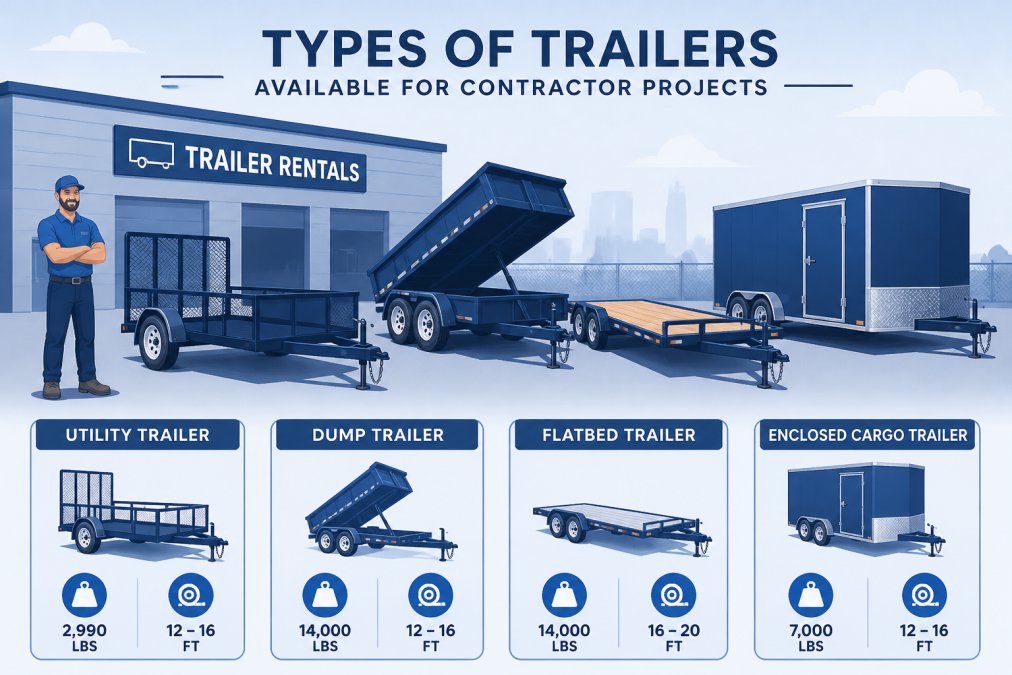
Understanding the distinctions between utility, dump, flatbed, and enclosed cargo trailers helps you avoid renting equipment that’s either overkill or inadequate.
Utility Trailers
Utility trailers handle general hauling of materials, tools, and equipment for most small-to-medium contractor projects. A standard utility trailer offers 5,000-7,000 lbs payload capacity with an open deck and side rails. They’re low-cost, simple to operate, and sufficient for drywall, lumber, landscaping materials, and small equipment. The limitation is that they’re open to weather, lack hydraulic unloading, and require manual loading and unloading of heavier items.
Dump Trailers
Dump trailers add hydraulic lift capability, allowing you to back up to the site and engage the hydraulic system to tilt the trailer bed and unload automatically. This saves hours per job for debris removal and bulk material hauling. Dump trailers typically range from 6-ton to 12-ton capacity with deck lengths from 12 to 16 feet. For contractors running multiple debris removal or demolition jobs, a dump trailer rental often pays for itself in labor savings alone.
Flatbed and Car Hauler Trailers
Flatbed trailers offer an open deck with no sides, ideal for oversized loads, irregular shapes, or vehicles. Car hauler trailers are specialized flatbeds with integrated ramps and tie-down systems for transporting automobiles. A car hauler with a winch system lets you load inoperable vehicles without a separate tow truck.
Enclosed Cargo Trailers
Enclosed cargo trailers protect materials from weather and theft, essential for contractors transporting tools or equipment that can’t be exposed to rain or where security is a concern. The enclosed design adds cost compared to open trailers but eliminates weather damage and provides theft protection.
Dump Trailer Rental for Contractors: What You Need to Know
A dump trailer rental requires understanding more than just size. The hydraulic system, towing requirements, and unloading capacity directly impact whether the rental solves your problem or creates new ones.
Dump trailers operate through a hydraulic pump system that tilts the cargo bed to 45-50 degrees, allowing materials to slide out. Most commercial dump trailers handle 10,000-15,000 lbs loaded weight, but the hydraulic system itself has limits independent of the trailer’s structural capacity.
When evaluating a dump trailer rental, verify the maximum payload weight, the hydraulic system’s rated lift capacity, and whether the rental company includes regular maintenance checks. A poorly maintained hydraulic system that fails mid-job creates downtime and safety hazards. Urgency Trailer Rentals provides well-maintained dump trailers, so you know the hydraulic system is operational before you leave the lot.
Commercial Trailer Rental Requirements and Safety Standards
Commercial trailer rentals for contractors must meet specific safety and regulatory standards. Trailers must have functioning brakes, working lights, safety chains, and properly secured cargo. You’re responsible for verifying these systems are operational before you leave the lot.
GVWR (Gross Vehicle Weight Rating) is critical. The GVWR is the maximum safe weight for the loaded trailer plus the towing vehicle combined. If your truck has a GVWR of 10,000 lbs and you’re towing a 5,000 lb trailer, you can only carry 5,000 lbs of cargo. Exceeding GVWR creates liability, reduces braking performance, and damages your vehicle’s suspension.
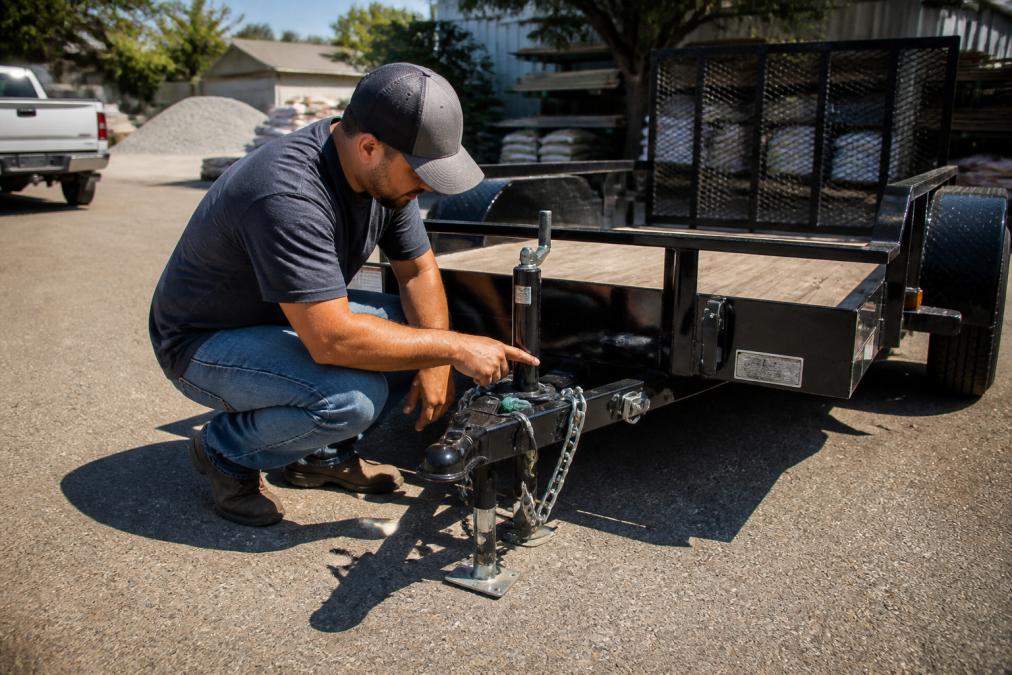
Safety chains are non-negotiable. Every trailer rental should include two independent safety chains that connect the trailer to the towing vehicle. Check that chains are rated for the trailer’s weight and properly attached before departing. Verify tire condition, brake functionality, and lighting systems at pickup.
Long-Term Trailer Rental for Business: Flexible Options
For contractors running ongoing projects, long-term trailer rental offers cost advantages over daily rates. A monthly rental typically costs less than daily rates multiplied by 30 days. For contractors managing continuous job site material flow, a month-long rental is more economical than daily pickups.
Long-term rentals require understanding the rental agreement terms. Clarify what maintenance is included, what damage is your responsibility, and what the damage waiver covers. Ask specifically about coverage for normal wear and tear versus accidental damage. Rental companies often offer discounted rates for committed longer-term rentals because they reduce fleet turnover and administrative overhead.
How to Choose the Right Trailer for Your Project
Choosing the right trailer requires matching three variables: the weight of your cargo, the volume you need to haul, and the frequency of hauling.
Start by calculating your actual payload weight. A cubic yard of construction debris weighs roughly 1,200-1,500 lbs depending on composition. A full load of drywall for a residential renovation can exceed 3,000 lbs quickly.
Next, assess the volume. How many trips are you willing to make? If you can fit everything in one trip with a smaller trailer, that’s more efficient than two trips with a larger trailer.
Then verify your towing vehicle’s capacity. Check your vehicle’s owner’s manual for the maximum towing capacity and GVWR. This is non-negotiable.
Finally, consider the job site conditions. Is the site easily accessible, or will you be navigating tight spaces?
When you call Urgency Trailer Rentals or any rental company, provide these details: the material type and weight, the volume you need to transport, your towing vehicle’s make and model, and the job site location. A professional rental company will recommend the right equipment based on actual requirements.
Key Factors: Towing Capacity, GVWR, and Load Distribution
Three technical specifications determine whether a trailer rental is safe and practical: towing capacity, GVWR, and load distribution.
Towing Capacity is the maximum weight your vehicle can safely pull. A truck might have a 7,000 lb towing capacity but a 10,000 lb GVWR. The towing capacity is the limiting factor. Exceed it and you risk transmission damage, brake failure, and loss of vehicle control.
GVWR is the maximum combined weight of the vehicle, trailer, cargo, passengers, and fuel. If your truck’s GVWR is 12,000 lbs and the truck itself weighs 5,000 lbs, you can safely carry 7,000 lbs total.
Load Distribution affects handling and safety. Cargo should be distributed evenly across the trailer bed, with slightly more weight toward the front. For dump trailers, ensure the load is centered before engaging the hydraulic lift.
| Factor | What It Means | Why It Matters |
|---|---|---|
| Towing Capacity | Max weight vehicle can pull | Exceeding it damages transmission and brakes |
| GVWR | Max combined system weight | Overloading reduces braking and causes suspension damage |
| Load Distribution | How cargo is positioned | Uneven loading causes trailer sway and instability |
| Hitch Class | Connection strength rating | Mismatched hitch to trailer capacity is unsafe |
| Brake Type | Surge or electric brakes | Affects stopping distance and control |
When you rent a trailer, ask the rental company to confirm your vehicle’s capacity matches the loaded trailer weight.
Trailer Rental Pricing, Delivery, and Insurance Considerations
Trailer rental pricing varies based on trailer type, rental duration, and local market conditions. Contact Urgency Trailer Rentals or other local providers for a quote based on your specific needs.
Delivery is a significant logistics factor. Some rental companies charge delivery fees; others include free local delivery. Urgency Trailer Rentals includes free local delivery in the Bakersfield Metro area, which eliminates the need to pick up and return equipment yourself. Clarify what "local delivery" means with your rental company and whether there are additional fees for delivery outside the primary service zone.
Insurance and Damage Coverage require careful attention. Most rental companies require you to carry liability insurance that covers rented equipment. Your personal auto insurance typically doesn’t cover rental equipment damage. Ask your insurance agent whether your policy covers rented trailers or whether you need a separate rider.
Damage waivers are optional add-ons that protect you from liability if the rental equipment is damaged during your use. A damage waiver typically costs 10-15% of the rental rate and covers accidental damage. Before signing a rental agreement, understand what damage is your responsibility, what the damage waiver covers, whether normal wear and tear is included, what the liability limits are, and whether delivery is included or charged separately.
Comparison of Rental Providers
The trailer rental market includes national companies like The Home Depot Rental, Herc Rentals, and United Rentals, alongside regional and local providers.
Urgency Trailer Rentals stands out for contractors in the local area because of three specific advantages: free local delivery in the Bakersfield Metro area, included securement items (straps, chains, wheel chocks) at no extra cost, and flexible daily-to-monthly rental options. The family-owned operation means personalized service and well-maintained equipment with regular servicing.
The Home Depot Rental offers competitive pricing and widespread availability. If you need a quick utility trailer rental for a single job and you’re comfortable picking up and dropping off at a Home Depot location, their rates are straightforward. The limitation is that their trailer selection is more limited, and they require a security deposit.
Herc Rentals and United Rentals excel for contractors needing heavy-duty equipment or specialized trailers. If you’re renting a 20-ton flatbed or a specialized dump trailer for a large construction project, these national companies have the fleet depth and maintenance infrastructure.
Neighbors Trailer (peer-to-peer rental platform) offers competitive daily rates and diverse trailer options from local owners. The advantage is potentially lower prices and direct negotiation with owners. The risk is that quality and maintenance standards vary significantly between individual owners.
| Provider | Strength | Best For | Limitation |
|---|---|---|---|
| Urgency Trailer Rentals | Free local delivery, included equipment | Local contractors needing reliability | Service area limited to Bakersfield region |
| The Home Depot Rental | Competitive pricing, widespread locations | Quick single-job rentals | Limited trailer selection, security deposit required |
| Herc Rentals | Heavy-duty and specialized equipment | Large construction projects | Pricing requires quote, geared toward commercial |
| United Rentals | Diverse trailer types, 24/7 support | Contractors needing variety | Pricing not transparent, corporate process |
| Neighbors Trailer | Peer-to-peer pricing, local options | Budget-conscious renters | Quality varies by owner, less accountability |
Common Mistakes Contractors Make When Renting Trailers
Underestimating weight is the most common mistake. Contractors eyeball the load and discover mid-project that they’re overloaded. Weigh your materials or research typical weights to prevent equipment damage and liability risk.
Mismatching towing vehicle capacity is equally common. Verify your vehicle’s specs before renting. A phone call to the rental company asking, "Can my 2020 Ford F-150 safely tow a loaded 7×14 dump trailer?" gets you a definitive answer.
Skipping the pre-rental inspection creates liability disputes. Spend five minutes photographing the trailer, checking lights and brakes, and noting any existing damage before you leave the lot.
Ignoring maintenance requirements during the rental period causes problems. If the rental agreement specifies tire pressure checks or brake inspections, do them.
Failing to clarify insurance coverage leaves you exposed. Ask explicitly what the rental company’s liability insurance covers and what’s your responsibility. Get answers in writing.
Practical Checklist: Before You Rent
- Calculate actual payload weight (weigh materials if possible)
- Measure the volume you need to transport
- Verify your towing vehicle’s make, model, and year
- Check your vehicle’s owner’s manual for towing capacity and GVWR
- Confirm the loaded trailer weight won’t exceed your vehicle’s GVWR
- Call the rental company with your vehicle details and ask for a confirmation that it’s suitable
- Ask about free delivery and what counts as "local"
- Clarify what equipment is included (straps, chains, wheel chocks, ramps)
- Understand the damage waiver: what it covers and what it costs
- Confirm insurance requirements and whether your policy covers rented equipment
- Inspect the trailer at pickup: check lights, brakes, tires, and document condition with photos
- Verify the hitch type and ball mount match your towing vehicle
- Ask about the return process and any late fees
- Get the rental agreement in writing and read it before signing
Why Local Contractors Choose Urgency Trailer Rentals
For contractors in the local area, the best trailer rental comes down to reliability, convenience, and value. Urgency Trailer Rentals delivers on all three.
Free local delivery eliminates the logistics headache of picking up and returning equipment. Unlimited mileage means you’re not penalized for distance traveled on your job sites. Included securement items (straps, chains, wheel chocks) reduce surprise costs and ensure you have proper safety equipment from day one.
The personalized service matters. When you call with a specific hauling challenge, you get a recommendation based on your actual needs, not just the highest-margin option. Well-maintained equipment with regular servicing means you’re not renting equipment that fails mid-project.
For contractors managing job site materials, debris removal, equipment transport, or vehicle hauling, Urgency Trailer Rentals simplifies the process. Book your trailer today and get the right equipment delivered to your job site.
Frequently Asked Questions
What type of trailer is best for construction debris removal?
A dump trailer is ideal for construction debris. These trailers feature hydraulic lift systems that tilt the cargo bed for easy unloading of rubble, soil, and waste materials. Dump trailers come in various capacities, typically ranging from 5,000 to 15,000 lbs payload. Check the GVWR and payload capacity to ensure it matches your debris volume and weight. Urgency Trailer Rentals offers dump trailers with flexible daily, weekly, and monthly rental options suited for contractor needs.
How do I know which trailer rental for contractors will handle my towing vehicle?
Match your vehicle's towing capacity to the trailer's GVWR (Gross Vehicle Weight Rating) and payload. Your vehicle's manual lists maximum towing capacity. For example, most pickup trucks tow 5,000 to 14,000 lbs. Verify the trailer's hitch class (Class I, II, III, or IV) matches your vehicle's hitch receiver. Urgency Trailer Rentals provides personalized recommendations to ensure your towing vehicle is compatible with the trailer you rent.
What's included with commercial trailer rental requirements when I rent from a local provider?
Most commercial trailer rentals include essential safety equipment: safety chains, wiring harness for brake lights, tie-down straps, and wheel chocks. Urgency Trailer Rentals includes securement items at no extra cost. Check the rental agreement for DOT compliance documentation and liability coverage details. Verify the trailer's brakes, lights, and structural integrity before leaving the facility. Ask about damage waivers and what damage is covered under your rental agreement.
Is long-term trailer rental for business cheaper than renting daily?
Yes, long-term trailer rental for business typically offers better per-day rates than daily rentals. Weekly and monthly rates spread the rental cost over more days, reducing the daily expense. For ongoing projects lasting weeks or months, monthly rental options provide the lowest per-day cost. Urgency Trailer Rentals offers flexible daily, weekly, and monthly options. Contact them for a quote based on your project timeline to compare pricing and find the most cost-effective option for your business needs.
Book Your Trailer with Urgency Trailer Rentals and eliminate the logistics complexity from your next project. Free local delivery, included securement equipment, and flexible rental terms mean you focus on the work, not the equipment management.
This article was written using GrandRanker