Table of Contents
- Types of Commercial Trailers Available for Rent
- Dry Van, Flatbed, and Enclosed Cargo Trailers
- Dump, Utility, and Car Hauler Trailers
- How to Choose the Right Commercial Trailer Rental for Business Needs
- Commercial Trailer Lease vs Rental: Which Makes More Sense?
- Semi-Trailer Rental Rates and What Drives the Cost
- Trailer Rental Insurance Requirements for Commercial Use
- Commercial Trailer Rental Inspection Checklist Before You Drive Off
- Why Bakersfield Businesses Choose Urgency Trailer Rentals
- Conclusion
Last Updated: August 6, 2026
Choosing the wrong trailer type costs Bakersfield businesses real time and money. At Urgency Trailer Rentals, we work with contractors, small business owners, moving companies, and vehicle enthusiasts across the Bakersfield metro every day. This guide covers everything you need to know about commercial trailer rental for business needs in 2026: which trailer type fits which job, what drives rental costs, what insurance you actually need, and how to inspect equipment before you drive off the lot.
Commercial trailer rental is the short- or long-term use of a trailer under a rental agreement, without the capital commitment of ownership or a multi-year lease. For most businesses, it is the most flexible way to scale hauling capacity up or down with demand.
Types of Commercial Trailers Available for Rent
Dry Van, Flatbed, and Enclosed Cargo Trailers
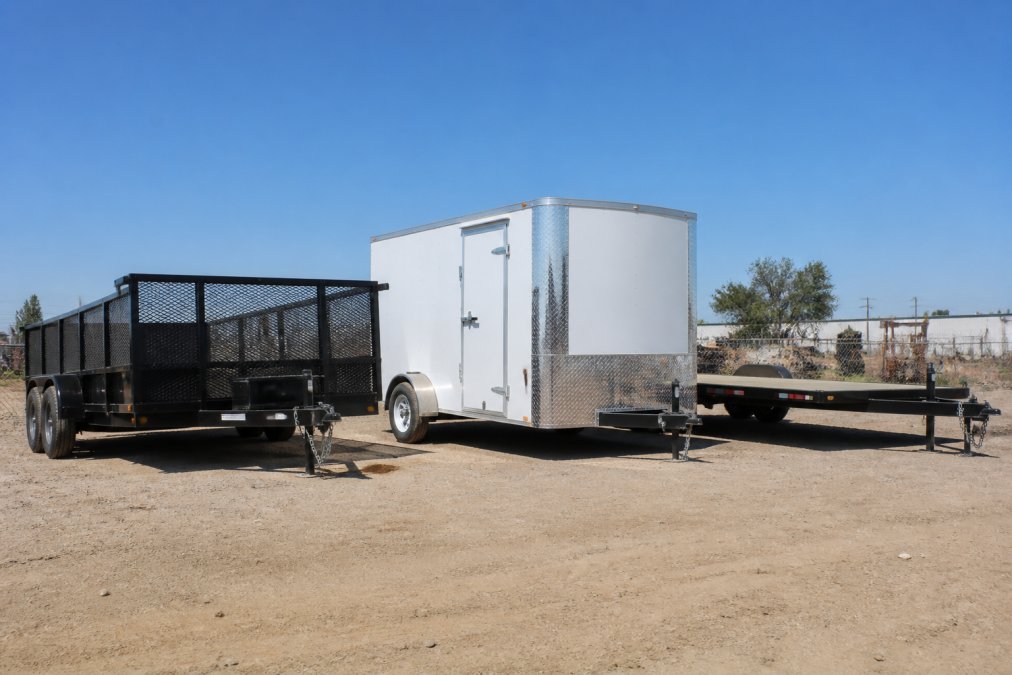
Dry van trailers are the workhorse of freight shipping. A standard 53-foot dry van offers a fully enclosed, weatherproof box, ideal for palletized goods, retail inventory, or any cargo that cannot be exposed to the elements. For businesses that need secure on-site storage as well as transport, a dry van parked at a job site doubles as a lockable storage unit.
Flatbed trailers sacrifice enclosure for accessibility. Loading from the sides, rear, or top makes them the obvious choice for lumber, steel, machinery, and oversized construction materials where a forklift or crane needs unrestricted access. Gross vehicle weight ratings on commercial flatbeds typically run from 40,000 to 48,000 pounds.
Enclosed cargo trailers are the smaller-scale version of dry vans, often in the 6×12 to 8.5×24 foot range. Moving companies, contractors hauling tools, and small business owners transporting finished goods all find enclosed cargo trailers the right balance of protection and maneuverability.
Dump, Utility, and Car Hauler Trailers
Dump trailers are the most time-efficient option for landscapers, demolition crews, and anyone hauling loose material, gravel, mulch, debris, or dirt. A hydraulic lift dumps the load without manual shoveling. Hauling capacity on rental dump trailers generally ranges from 7,000 to 14,000 pounds.
Utility trailers are open-deck, low-profile, and versatile. Landscapers use them for mowers and equipment. Homeowners use them for furniture and yard waste. Their open design makes loading straightforward, though cargo security requires proper tie-downs.
Car hauler trailers with winches should include a functional electric or hydraulic winch capable of loading an inoperable vehicle. Vehicle enthusiasts and dealerships transporting non-running vehicles should confirm winch capacity before booking.
|
Trailer Type |
Primary Use |
Typical Hauling Capacity |
Best For |
|---|---|---|---|
|
Dry Van |
Enclosed freight, on-site storage |
40,000-45,000 lbs |
Retail, e-commerce, construction supply |
|
Flatbed |
Open-deck oversized loads |
40,000-48,000 lbs |
Lumber, steel, machinery |
|
Enclosed Cargo |
Protected smaller loads |
7,000-14,000 lbs |
Moving, tools, finished goods |
|
Dump |
Loose material removal |
7,000-14,000 lbs |
Landscaping, demolition, debris |
|
Utility |
General open-deck hauling |
3,500-7,000 lbs |
Equipment, furniture, yard waste |
|
Car Hauler |
Vehicle transport |
7,000-10,000 lbs |
Inoperable or multiple vehicles |
|
Refrigerated (Reefer) |
Temperature-sensitive cargo |
40,000-45,000 lbs |
Food, pharmaceuticals |
|
Intermodal Chassis |
Container transport |
40,000+ lbs |
Port and rail freight |
How to Choose the Right Commercial Trailer Rental for Business Needs
Start with cargo type instead of trailer size. The correct sequence is: cargo type first, then weight, then dimensions, then towing capacity of your vehicle.
Match Trailer Type to Your Cargo and Job Site
A common mistake is renting an open utility trailer for materials that need to stay dry. Another is renting a flatbed when the job site has no forklift.
Ask yourself three questions before booking:
- Does the cargo need to be enclosed? If yes, you need an enclosed cargo trailer or dry van.
- Does the cargo need to be loaded from the side or top? If yes, a flatbed is the right call.
- Is the vehicle being towed operable? If not, confirm the rental includes a winch-equipped car hauler.
Job site access matters too. Narrow residential streets or tight commercial lots make a 53-foot semi-trailer impractical. A shorter enclosed cargo trailer or utility trailer is the operationally sound choice.
Trailer Specifications and Configurations to Check
Once you have the trailer type, verify these specifications:
- Gross Vehicle Weight Rating (GVWR): The maximum loaded weight the trailer is rated to carry.
- Interior dimensions: Length, width, and height for palletized or stacked cargo.
- Axle configuration: Single-axle trailers are lighter and easier to maneuver; tandem-axle trailers carry more weight and are more stable at highway speeds.
- Hitch type: Confirm your tow vehicle has the correct hitch class and ball size.
- Brake controller compatibility: Trailers over a certain weight require electric brakes and a compatible controller in the tow vehicle.
Commercial Trailer Lease vs Rental: Which Makes More Sense?
Commercial trailer rental is the right choice when your need is project-specific or seasonal. You pay for the days or weeks you use the equipment, return it, and carry no ongoing liability. For small businesses, contractors, and moving companies with fluctuating demand, rental preserves cash flow and eliminates the maintenance burden.
Commercial trailer leasing is structured for businesses with consistent, ongoing hauling needs, typically 12 to 36 months. Full-service leases often include preventative maintenance, roadside assistance, and trailer tracking. The trade-off is commitment: you pay whether the trailer is in use or not.
According to guidance from the Federal Motor Carrier Safety Administration on commercial vehicle leasing, lease agreements must include specific terms about equipment condition, maintenance responsibility, and insurance obligations.
The practical rule: if you need a trailer more than 200 days per year, a lease is worth modeling. Below that threshold, rental is almost always more cost-effective.
|
Factor |
Rental |
Lease |
|---|---|---|
|
Commitment |
Daily / weekly / monthly |
12-36 months |
|
Maintenance responsibility |
Provider |
Varies (often provider on full-service) |
|
Best for |
Seasonal or project-based needs |
Consistent year-round hauling |
|
Upfront cost |
Low |
Moderate to high |
|
Flexibility |
High |
Low |
|
Asset use risk |
None |
Business bears idle-time cost |
Semi-Trailer Rental Rates and What Drives the Cost
Semi-trailer rental rates vary significantly based on trailer type, rental duration, geographic market, and current freight demand.
The main cost drivers are:
- Trailer type: Refrigerated trailers cost more than dry vans. Specialized flatbeds cost more than standard open decks.
- Rental duration: Daily rates are proportionally higher than weekly rates, which are higher than monthly rates.
- Mileage: Some providers charge a flat rate with unlimited mileage. Others add a per-mile charge on top of the base rate.
- Delivery and pickup fees: Free local delivery is not universal. Many providers charge for drop-off and pickup outside their branch footprint.
- Demand and seasonality: Freight shipping demand peaks around the holidays and during agricultural harvest seasons, raising rates.
For accurate pricing, request a quote directly from the provider. Pricing depends on quantity, dates, and delivery.
Trailer Rental Insurance Requirements for Commercial Use
Trailer rental insurance requirements for commercial use are not optional and are not automatically covered by your standard commercial auto policy.
The Insurance Information Institute’s guidance on commercial auto coverage notes that non-owned trailer liability, coverage for a trailer you are operating but do not own, is a distinct coverage that must be specifically added to a commercial auto policy.
Here is what you need to understand before you rent:
Non-owned trailer liability: Covers bodily injury and property damage you cause to others while towing a rented trailer. Required in most states for commercial operators.
Physical damage coverage for the rented trailer: Covers repair or replacement costs if the trailer is damaged while in your custody. Some rental agreements include a damage waiver for an additional daily fee.
Cargo insurance: Covers the goods inside the trailer. This is separate from trailer damage coverage and is essential for any business transporting goods with commercial value.
State minimum requirements: Commercial vehicle insurance requirements vary by state. In California, the Department of Motor Vehicles and the California Department of Insurance set minimum liability thresholds for commercial operations.
Commercial Trailer Rental Inspection Checklist Before You Drive Off
A pre-departure inspection protects you from being charged for damage you did not cause and protects everyone on the road from equipment failure. According to the FMCSA’s commercial vehicle inspection standards, a pre-trip inspection is a federal requirement for commercial drivers operating vehicles above 10,001 pounds GVWR.
Structural and Safety Items to Verify
- Trailer frame: no visible cracks, bends, or weld failures
- Coupler/hitch connection: properly seated and locked, safety chains attached and crossed
- Tires: no visible sidewall damage, adequate tread depth, properly inflated
- Wheel bearings: no excessive heat or play when wheel is rocked side to side
- Brakes: electric brake connection functioning, brake controller in tow vehicle responding
- Axles and suspension: no visible damage, leaf springs intact
- Landing gear: fully retracted and secured
- Doors and latches: open, close, and lock correctly; seals intact on enclosed trailers
Securement Equipment and Lighting
- Tie-down straps and chains: present, undamaged, rated for the load
- Load bars or decking boards: present if applicable
- Running lights: front, rear, and side marker lights all functioning
- Brake lights: activate when brake pedal is pressed
- Turn signals: left and right functioning on all trailer lights
- Reflective tape: present and undamaged on rear and sides
- License plate: attached and illuminated at night
- Winch (car haulers): cable or strap undamaged, mechanism operates smoothly
Document any pre-existing damage with photos before you leave the lot. Note it on the rental agreement. This is the single most effective way to avoid a damage dispute on return.
Why Bakersfield Businesses Choose Urgency Trailer Rentals
Most rental decisions come down to availability, reliability, and total cost. For businesses operating in the Bakersfield metro, Urgency Trailer Rentals addresses all three.
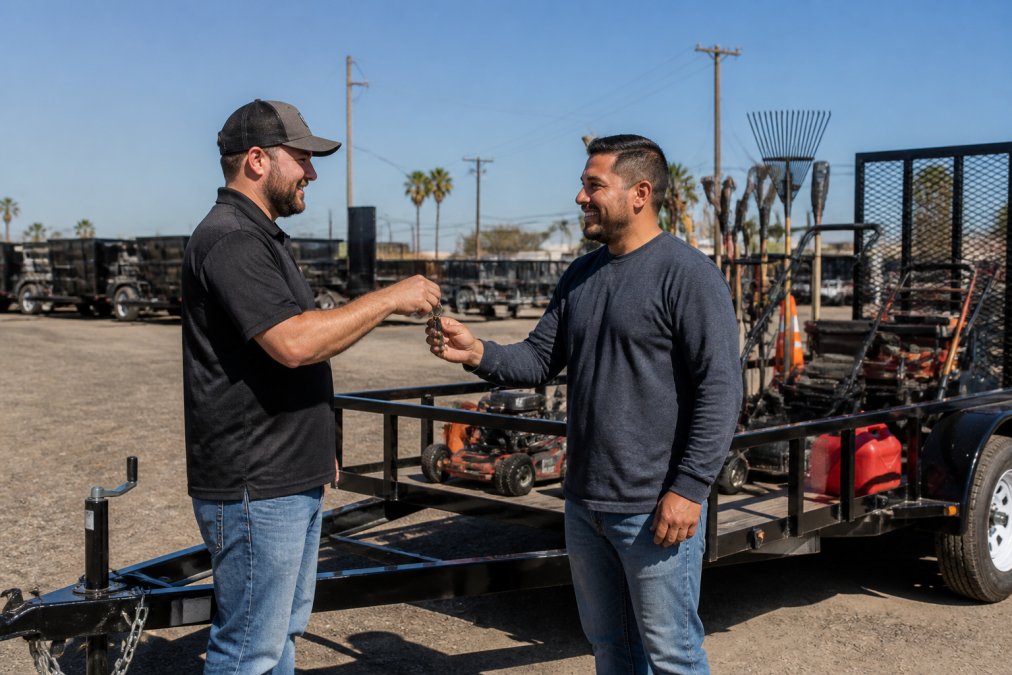
Free local delivery is the most immediate differentiator. Urgency Trailer Rentals delivers within the Bakersfield metro area at no extra cost.
Unlimited mileage on all equipment means no per-mile surprises on your invoice. Whether you are making one trip across town or running multiple loads across the metro, the rate is the rate.
Every rental includes securement items, straps, chains, and related equipment at no additional charge. For contractors and moving companies who have been nickel-and-dimed by other providers, this matters.
The fleet covers the full range of business hauling needs: utility trailers, dump trailers, enclosed cargo trailers, and car haulers with winches for inoperable vehicles. Flexible rental durations, daily, weekly, or monthly, mean you are not paying for days you do not need.
For last-minute capacity needs, the online booking process and family-owned operational model mean faster turnaround. If you have a moving job coming up or a job site that needs a trailer same-day, that responsiveness is the difference between getting the work done and losing a day.
Frequently Asked Questions
What types of commercial trailers are available for rent?
Common commercial trailer rental options include dry van trailers for general freight, refrigerated trailers (reefers) for temperature-sensitive cargo, flatbed trailers for oversized or heavy loads, enclosed cargo trailers for secure transport, dump trailers for yard waste and construction debris, utility trailers for general hauling, and car haulers for vehicle transport. In Bakersfield, Urgency Trailer Rentals offers utility, dump, enclosed cargo, and car hauler trailers to cover most business and personal hauling needs.
What is the difference between trailer leasing and trailer rental?
A rental is a short-term agreement, typically daily, weekly, or monthly, suited for one-off projects or seasonal demand spikes. A lease is a longer-term contract, usually 12 to 36 months, that gives you dedicated equipment at a predictable monthly cost. Rentals offer more flexibility with no long-term commitment, while leases often work out cheaper per day when you need a trailer consistently. For most small businesses and contractors with occasional hauling needs, a flexible rental is the more practical choice.
What are the insurance requirements for renting a commercial trailer?
Federal regulations under FMCSA require that any trailer operated commercially on public roads carry minimum liability coverage. Most rental providers require proof of commercial auto liability insurance before releasing a trailer. Your existing business auto policy may extend to rented trailers, but confirm this with your insurer before booking. Some rental providers offer supplemental damage coverage at checkout. California also mandates that tow vehicles and their trailers meet state DMV registration and brake requirements, so verify your tow vehicle is properly equipped.
Do I need a CDL to pull a commercial rental trailer?
Whether you need a Commercial Driver's License depends on the combined gross vehicle weight rating of your tow vehicle and trailer. In California, a standard Class C license covers combinations under 26,001 lbs GVWR. If the combined weight exceeds that threshold, a Class A CDL is required. For most utility, dump, enclosed cargo, and car hauler trailers rented for local business use in Bakersfield, a standard license is sufficient, but always confirm the trailer's GVWR with your rental provider before booking.
How much does it cost to rent a commercial trailer?
Commercial trailer rental rates vary based on trailer type, size, rental duration, and provider. Large national fleets publish rates ranging from roughly $150 per week for a basic dry van to several hundred dollars weekly for refrigerated trailers. Local providers like Urgency Trailer Rentals price competitively for the Bakersfield market, and factors like free delivery and included securement equipment affect total cost. For current pricing on utility, dump, enclosed cargo, or car hauler rentals, visit urgencytrailer.com or request a quote directly.
This article was written using GrandRanker