Table of Contents
- Utility Trailer Rental & Delivery Options
- Types of Trailers Available for Your Project
- Towing Capacity Requirements & Vehicle Compatibility
- How Delivery & Pickup Works
- Rental Rates, Deposits & Rental Agreement Terms
- Utility Trailer Rental Insurance & Liability Coverage
- Why Equipment Maintenance & Safety Matter
- How to Book Your Trailer
Last Updated: August 13, 2026
Utility Trailer Rental & Delivery Options
When you need to haul materials, equipment, or vehicles, a utility trailer rental delivery service transforms logistics into a straightforward transaction. Whether you’re moving furniture, hauling landscaping debris, or transporting an inoperable vehicle, renting saves time, money, and the hassle of ownership. At Urgency Trailer Rentals, we maintain a diverse fleet and offer flexible rental terms to match your specific hauling needs. The key advantage is eliminating storage, maintenance, and insurance headaches while accessing equipment exactly when you need it.
Types of Trailers Available for Your Project
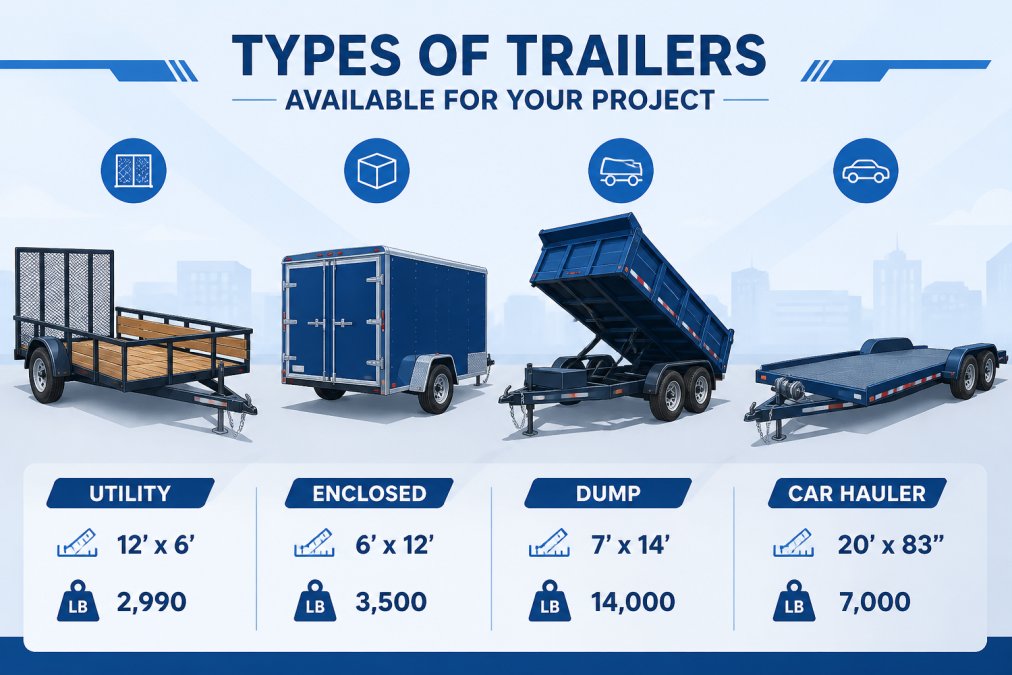
Different hauling jobs demand different equipment. Choosing the wrong trailer type wastes money and creates operational friction.
Open Utility Trailers
An open utility trailer is the workhorse of hauling, a flatbed or slatted design with no roof or sides, giving maximum flexibility for irregular loads. You’ll use this for landscaping materials, construction debris, furniture moves, and general cargo that doesn’t require weather protection. The advantage is straightforward: load from any angle, transport efficiently, and unload quickly. Open utility trailers come in various sizes, from compact 4×8 configurations to larger 6×12 or 6×16 models. Most homeowners and contractors find that a mid-size open utility trailer handles 80% of their hauling projects.
Enclosed Cargo Trailers
When your cargo needs weather protection or security, an enclosed cargo trailer is the answer. These fully enclosed units with locking doors protect sensitive materials, equipment, or goods from rain, wind, and theft during transport. Common uses include moving household goods, transporting valuable equipment, or hauling items you don’t want exposed to the elements. The trade-off is reduced loading flexibility compared to open trailers, but the security and protection justify the choice for higher-value loads or weather-sensitive materials.
Dump Trailers
A dump trailer features a hydraulic lifting bed that tilts to discharge bulk materials quickly. Landscapers, contractors, and property maintenance crews rely on dump trailers for gravel, mulch, soil, construction debris, and demolition waste. The efficiency gain is significant: what takes hours to unload manually takes minutes with a dump mechanism, making dump trailers cost-effective through labor savings.
Car Haulers with Winches
A car hauler with winch capability is specialized equipment for transporting vehicles, whether operational, inoperable, or multiple units at once. The winch system pulls vehicles up the ramps and secures them for safe transport. This is essential for vehicle dealerships, auto enthusiasts, moving companies, and anyone relocating an inoperable car. The winch eliminates the need for the vehicle to be drivable onto the trailer.
Towing Capacity Requirements & Vehicle Compatibility
Renting a trailer without confirming your vehicle can safely tow it creates liability, safety, and legal exposure. Your towing vehicle has a maximum towing capacity specified by the manufacturer, check your owner’s manual or the vehicle’s specifications plate. This number is the absolute limit your vehicle can tow safely.
The calculation isn’t just about the trailer’s empty weight. A 6×12 utility trailer might weigh 1,500 pounds empty, but add 4,000 pounds of landscaping material and you’re at 5,500 pounds total. That loaded weight must fall within your vehicle’s towing capacity with a safety margin. Most experts recommend staying 10-15% below your vehicle’s maximum to account for braking, handling, and unexpected conditions.
The hitch type and class also matter. A Class II hitch handles different loads than a Class III or Class IV. Gross vehicle weight rating (GVWR) is another critical factor, your vehicle has a maximum loaded weight it can carry, including passengers, cargo, and tongue weight from the trailer. The tongue weight (the downward force the trailer exerts on your hitch) typically runs 10-15% of the trailer’s total loaded weight. A 5,500-pound loaded trailer creates roughly 550-825 pounds of tongue weight. Urgency Trailer Rentals matches trailer recommendations to your vehicle’s actual specifications, not assumptions.
How Delivery & Pickup Works
The logistics of getting a trailer to your location and retrieving it afterward shouldn’t require multiple follow-up calls. Most rental companies offer delivery within a defined service area. Urgency Trailer Rentals provides free local delivery in the Bakersfield Metro area, meaning your trailer arrives at your location ready to use.
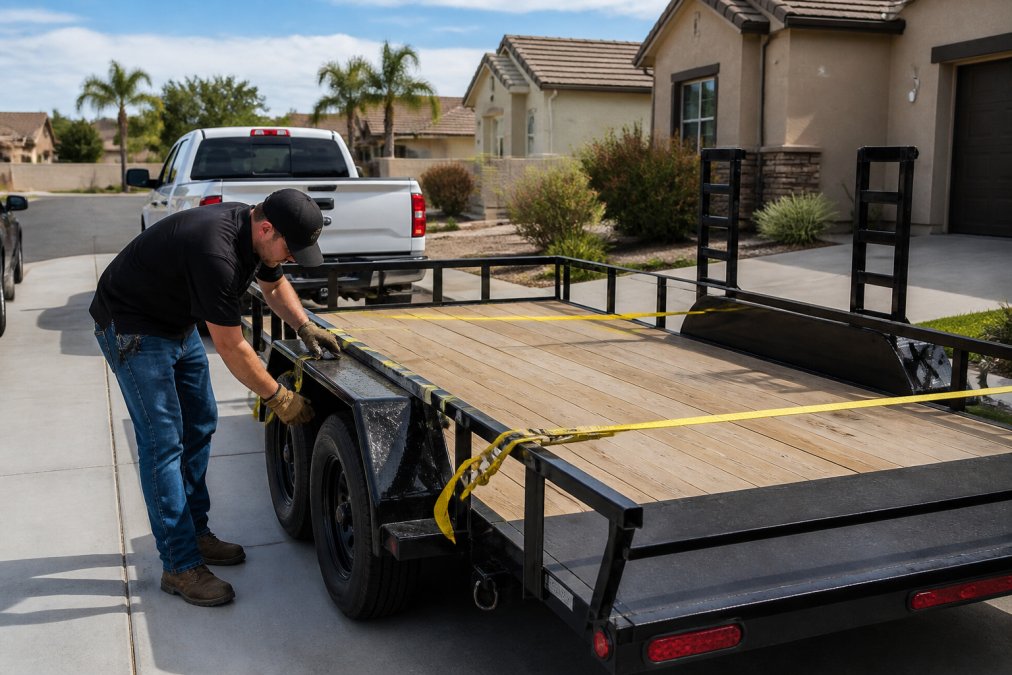
You book your trailer online or by phone, specify your delivery address and date, and the rental company delivers it to you at the scheduled time. The trailer arrives fully inspected, with all securement items included, straps, ramps, chains, or whatever equipment your specific trailer type requires. Pickup follows the same straightforward process. When your rental period ends, you return the trailer to the agreed location, or the company picks it up from your site. Urgency Trailer Rentals includes free local delivery at no extra cost, eliminating surprise fees that inflate your total expense.
A reputable utility trailer rental delivery service inspects equipment before every rental, checking for damage, worn tires, functional lights, secure hitch connections, and complete securement equipment. You should do a quick visual inspection when the trailer arrives and document any pre-existing damage. This protects you from being charged for wear and tear you didn’t cause.
Rental Rates, Deposits & Rental Agreement Terms
Pricing for utility trailer rentals varies based on trailer type, rental duration, and local market conditions. Contact Urgency Trailer Rentals directly for a quote tailored to your specific project. Pricing depends on quantity, dates, and delivery, and current rates are available through our booking system or a direct conversation with our team.
A rental agreement is a legal contract that specifies your obligations and the rental company’s responsibilities. Key terms typically include:
- Rental duration: Daily, weekly, or monthly periods with clear start and end dates
- Equipment condition: Documentation of the trailer’s condition at pickup and return
- Damage liability: What damage is your responsibility versus normal wear and tear
- Late fees: Charges if you return the trailer after the agreed date
- Mileage: Whether the rental includes unlimited mileage or charges per mile
- Insurance requirements: Whether you need your own coverage or if the rental company provides liability protection
- Securement equipment: What straps, chains, ramps, or other items are included
A security deposit is standard across the industry. This protects the rental company against damage, theft, or non-return. Deposits typically range based on trailer value. Urgency Trailer Rentals can explain deposit requirements when you request a quote. Read the rental agreement carefully before signing and understand what constitutes damage you’re responsible for versus normal wear.
Utility Trailer Rental Insurance & Liability Coverage
Insurance is the protection that saves you thousands if something goes wrong. Most personal auto insurance policies don’t cover rental trailers. Your homeowner’s or business insurance might provide some coverage, but gaps exist. A liability waiver protects the rental company, not you. If your rented trailer causes damage to someone else’s property or injures someone, you’re financially responsible unless you have adequate coverage.
Rental companies typically offer optional insurance coverage that you can add to your rental. This covers damage to the trailer itself and provides liability protection if the trailer causes injury or property damage. Before renting, contact your insurance agent and ask specifically about rental trailer coverage. Ask whether your policy covers rented trailers, what the liability limits are, and whether you need additional coverage. Getting clarity beforehand prevents discovering you’re uninsured after an incident.
Why Equipment Maintenance & Safety Matter
A well-maintained trailer is a safe trailer. Safety checks before every rental aren’t optional, they’re essential. Tire condition is the first thing to verify. Worn or underinflated tires blow out, especially under load at highway speeds. Lights must function, brake lights, turn signals, and running lights are legally required and critical for safe operation.
The hitch connection must be secure. A loose hitch connection can cause trailer sway or detachment. Verify the hitch ball is properly secured, the safety chains are attached, and the electrical connection is solid. Securement equipment must be complete and functional. Straps should have no tears or fraying. Ramps should be sturdy with no bent or broken sections. Urgency Trailer Rentals maintains equipment to safety standards, but you should still inspect what arrives. A quick walk-around checking tires, lights, hitch security, and securement equipment takes five minutes and could prevent serious problems.
How to Book Your Trailer
Booking a utility trailer rental delivery service should be straightforward. Start by identifying which trailer type matches your project. Describe your hauling needs to the rental team if you’re unsure. Next, select your rental dates, do you need the trailer for one day, a full week, or a month? Longer rental periods typically offer better daily rates.
Provide your delivery address and specify whether you need the trailer delivered to your location or prefer to pick it up from the rental facility. Confirm the delivery date and time window. Urgency Trailer Rentals provides free local delivery in the Bakersfield Metro area, so delivery is included at no extra charge for qualifying locations.
Complete the rental agreement, review insurance options, and arrange payment. Most rental companies accept credit cards, checks, or electronic transfers. Confirm the security deposit amount and understand the payment terms. Ask about cancellation policies in case your project gets delayed.
Once your booking is confirmed, you’ll receive a confirmation email with all rental details, trailer specifications, delivery information, and the rental agreement. Review everything carefully. If something doesn’t match what you discussed, contact the rental company immediately to correct it before the rental period begins.
Coordinating a hauling project involves multiple moving pieces, the right trailer, proper vehicle compatibility, reliable delivery, and clear agreements. Urgency Trailer Rentals simplifies this by offering a diverse selection of well-maintained trailers, free local delivery in the Bakersfield Metro area, flexible rental durations, and personalized recommendations for your specific project. When you need a utility trailer rental delivery service you can trust, our family-owned operation handles the logistics so you can focus on getting your project done efficiently. Book your trailer today and experience the convenience of equipment delivered when you need it, maintained to safety standards, and backed by a team that understands your hauling challenges.
Frequently Asked Questions
How do I know which trailer size and type I need for my project?
Start by identifying what you're hauling: furniture requires an enclosed cargo trailer, yard waste fits an open utility trailer, and inoperable vehicles need a car hauler with winch. Consider your vehicle's towing capacity (found in your owner's manual or on the driver's door jamb) and match it to the trailer's gross vehicle weight rating. Contact us with your project details, and we'll recommend the right trailer and help ensure your towing vehicle can safely handle the load.
What are the towing capacity requirements I need to check before renting?
Your vehicle's towing capacity is the maximum weight it can safely pull. Check your owner's manual or the sticker on your driver's door jamb for this number. Compare it to the trailer's gross vehicle weight rating (GVWR), which includes the trailer itself plus cargo. Never exceed your vehicle's rated capacity, doing so risks brake failure, transmission damage, and loss of control. We'll confirm compatibility when you book, but it's your responsibility to verify your vehicle can handle the load safely.
What does utility trailer rental insurance cover, and do I need it?
Your personal auto insurance may extend to rented trailers, but coverage limits vary. A liability waiver covers damage you cause to our equipment; it does NOT cover damage to your cargo or third-party property. We recommend checking with your insurance agent about rental coverage before booking. Most commercial users and those transporting high-value items purchase additional coverage. Ask us about available options when you reserve your trailer.
Can you deliver a trailer same-day if I book last-minute?
Same-day delivery depends on availability and your location within our local service area. Call or book online as soon as you know you need a trailer, we'll confirm availability and schedule delivery. For urgent jobs, contacting us directly gives us the best chance to accommodate your timeline. Delivery is free within the Bakersfield Metro area, making last-minute rentals more affordable than scrambling to find alternatives.
This article was written using GrandRanker