Table of Contents
- Assess Your Project and Choose the Right Trailer Type
- Understand Towing Capacity for Utility Trailers
- Utility Trailer Rental Requirements You Need to Know
- Step-by-Step: How to Rent Utility Trailers
- Average Cost to Rent a Utility Trailer
- Renting vs. Buying: Which Makes Sense for Your Situation
- Essential Safety and Legal Considerations
- Conclusion
Last Updated: August 14, 2026
Assess Your Project and Choose the Right Trailer Type
Different projects demand different trailers. Choosing poorly wastes money and creates safety risks. A utility trailer works for general hauling, but a dump trailer, enclosed cargo trailer, or car hauler each solve specific problems that a basic utility trailer cannot.
Start by asking: What am I moving? How much does it weigh? How far does it need to go? Your answers determine which trailer type makes sense.
Utility trailers handle general hauling, furniture, yard waste, landscaping materials, equipment, and small loads. They’re open-bed designs with tie-down points and cost less than specialized options. Dump trailers tilt hydraulically to unload debris and construction waste without manual labor. Enclosed cargo trailers protect sensitive items from weather and theft. Car haulers with winches handle inoperable vehicles and multiple cars, essential for dealerships or vehicle enthusiasts moving non-running inventory.
At Urgency Trailer Rentals, homeowners often default to the largest available trailer when a smaller one would work fine. Oversizing costs more and complicates maneuvering. Undersizing means multiple trips or overloading, creating liability and safety problems. The right size is the smallest trailer that handles your full load in one trip.
Before you call for a quote, weigh your load if possible. Knowing the actual weight prevents you from booking equipment that can’t legally carry your cargo.
Understand Towing Capacity for Utility Trailers
Your vehicle’s towing capacity is the hard ceiling for what you can legally haul. Exceeding it violates state vehicle codes and voids your insurance.
Towing capacity is the maximum weight your vehicle can safely pull. This number is in your owner’s manual and varies dramatically by vehicle type. A compact sedan might have no towing capacity. A pickup truck typically ranges from 5,000 to 14,000 pounds. An SUV falls somewhere in between.
Payload capacity is the maximum weight your vehicle can carry in its cargo area and bed combined, including passengers. A truck rated for 10,000 pounds of towing might have only 2,000 pounds of payload capacity, meaning if you load 500 pounds of gear in the bed, you can only tow 9,500 pounds of trailer and cargo.
Gross Vehicle Weight Rating (GVWR) is the maximum total weight of your vehicle when fully loaded. Exceeding GVWR is illegal and dangerous, it destabilizes handling, increases stopping distance, and can cause tire failure. Your vehicle’s door jamb shows the GVWR; subtract the vehicle’s curb weight to find your actual payload capacity.
Many renters ignore GVWR and assume towing capacity is the only limit. If you’re stopped by law enforcement and weighed, exceeding GVWR can result in fines and citations. If you’re in an an accident while overweight, your insurance may deny the claim.
The math is critical: add the trailer’s dry weight plus your cargo weight. That total cannot exceed your vehicle’s towing capacity. If it does, you need a different vehicle or smaller trailer.
Utility Trailer Rental Requirements You Need to Know
Before you can reserve a utility trailer, rental companies verify that you meet basic legal and safety standards.
Driver’s License and Age
You’ll need a valid, current driver’s license. Most companies require renters to be at least 18 years old, though some set the minimum at 21.
Vehicle Registration and Insurance
Bring your vehicle registration to prove ownership or lease. Confirm that your auto insurance covers trailer towing. Some policies exclude towing or require an endorsement. Call your insurer before renting.
Rental Agreement and Security Deposit
You’ll sign a rental agreement outlining your responsibilities, damage liability, and return conditions. Most companies require a security deposit, typically refunded after you return the trailer in acceptable condition.
Safety Equipment Inspection
Before you leave, inspect all provided equipment: safety chains, hitch receiver, ball mount, wiring harness, and tie-down straps. Document any pre-existing damage in writing. Urgency Trailer Rentals includes all securement items at no extra cost and conducts regular equipment inspections.
Load Securement Knowledge
You’re responsible for properly securing your load using the provided tie-down points. Understand weight distribution, tie-down techniques, and load balance before you depart.
Step-by-Step: How to Rent Utility Trailers
The rental process is straightforward when you know what to expect. Most companies now offer online booking.
Step 1: Determine Your Hauling Needs
Write down specifics: What are you hauling? How much does it weigh? How far? When do you need it? How long (hours, days, weeks)? This clarity speeds up the conversation and ensures you get the right equipment. Experienced companies ask targeted questions to narrow down the best option.
Step 2: Check Vehicle Compatibility
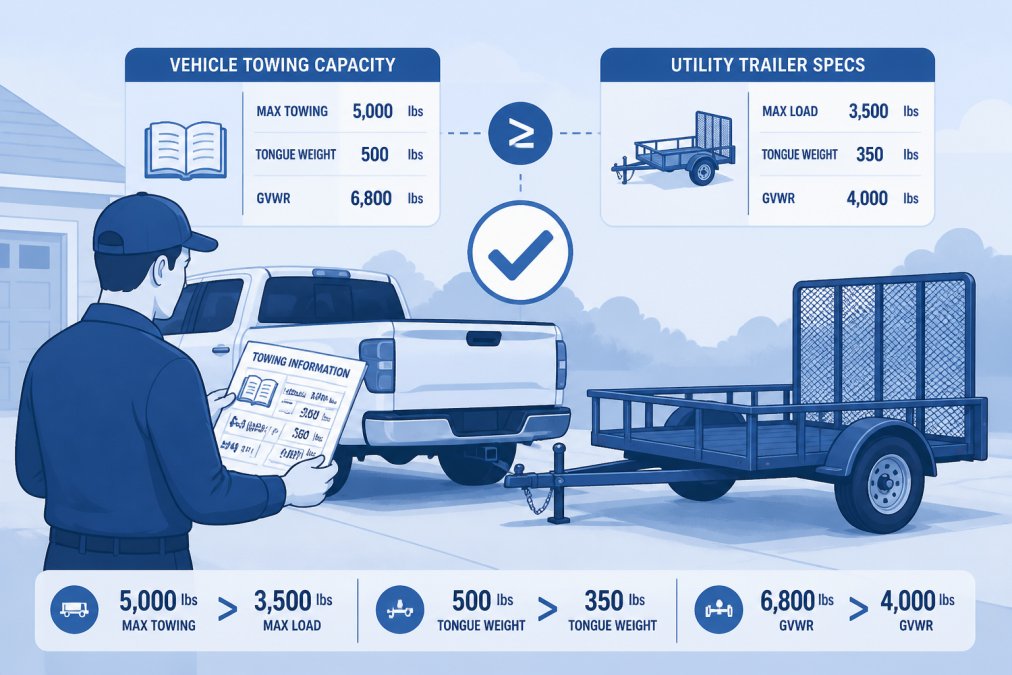
Pull your vehicle’s owner’s manual or look up your towing capacity online. Cross-reference it against the trailer’s dry weight plus your estimated cargo weight. If the total exceeds your towing capacity, you need a smaller trailer or different vehicle. Also verify that your vehicle has a hitch receiver.
Step 3: Reserve Your Trailer Online
Most rental companies, including Urgency Trailer Rentals, offer online booking. Select your trailer type, rental duration, and pickup date. The system confirms availability and pricing. You’ll provide your driver’s license information, vehicle details, and contact information. Payment is typically due at pickup or immediately online.
Step 4: Inspect Equipment Before Pickup
When you arrive to pick up your trailer, conduct a thorough walk-around inspection. Check for visible damage, tire condition, hitch security, wiring harness functionality, safety chains, tie-down straps, brake responsiveness, and cargo area integrity. Document any damage with photos. Point out issues to rental staff and ask them to note it on the rental agreement.
Step 5: Hitch and Secure Your Load
Connecting the hitch:
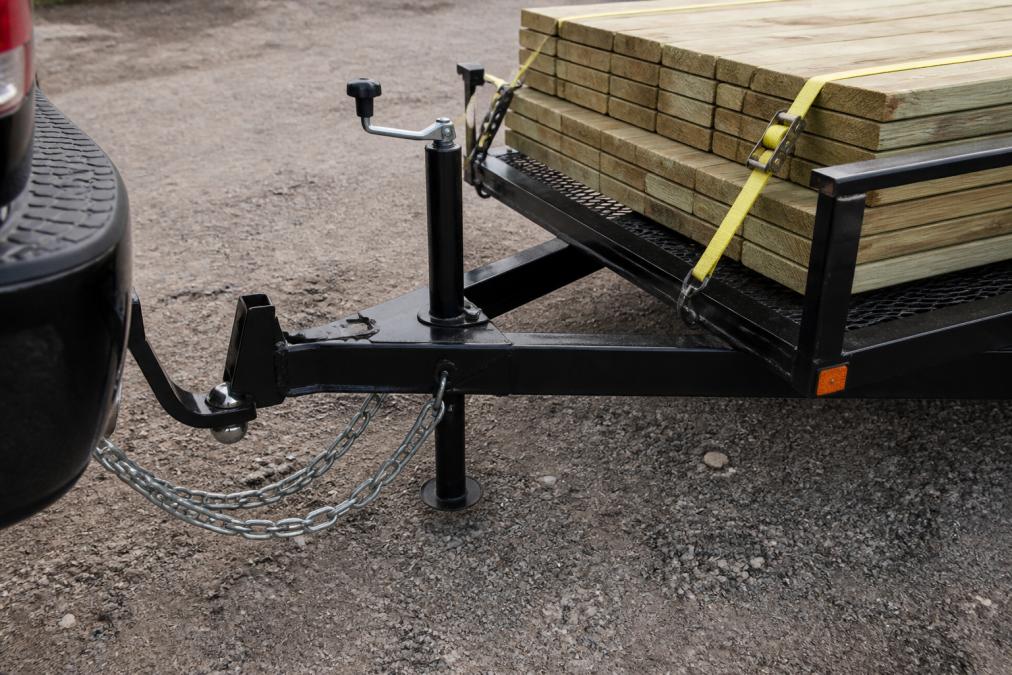
- Align the trailer’s coupler with the ball mount on your vehicle’s hitch receiver
- Back up slowly until the coupler slides over the ball
- Lower the coupler’s latch lever to lock it in place
- Insert the hitch pin and secure it with a cotter pin or clip
- Attach safety chains to the trailer frame and cross them under the coupler
- Connect the wiring harness to your vehicle’s trailer connector
Securing your load:
- Distribute weight evenly, heavier items toward the front
- Use the trailer’s tie-down points to anchor your cargo
- Attach tie-down straps from each corner of your load to separate tie-down points
- Tighten straps firmly but not so tight that they deform cargo
- Verify that nothing shifts when you push on it
Step 6: Return and Complete Your Rental
Return the trailer by the agreed-upon date and time. Late returns typically incur additional charges. When you arrive at the return location, the rental company will inspect the trailer for damage beyond normal wear. If everything is acceptable, your security deposit is refunded within 3-5 business days. Urgency Trailer Rentals handles damage claims fairly and transparently.
Average Cost to Rent a Utility Trailer
Rental pricing depends on trailer type, size, rental duration, and local market conditions. Daily rates typically offer better per-hour value than hourly rates. Weekly and monthly rentals offer the best per-day value.
Factors affecting price include the trailer’s capacity, whether it’s basic or specialized equipment, distance for delivery and pickup, and seasonal demand. Contact Urgency Trailer Rentals directly for a quote. Provide your rental dates, trailer type, and location for an exact price with no surprises.
The cheapest option isn’t always the best value. A company offering free local delivery, included securement equipment, and unlimited mileage may cost less overall than a competitor with lower daily rates but additional fees. [Compare the full cost, not just the headline rate](/lp3-rentals-vs-hb-trailer-rental-comparison/).
Renting vs. Buying: Which Makes Sense for Your Situation
This decision hinges on frequency of use and total cost of ownership. If you haul once a year, renting is almost always cheaper. If you haul weekly, buying becomes competitive.
Rent if: You haul infrequently (fewer than 10 times per year), lack storage space, want to avoid maintenance responsibility, or need different trailer types for different projects.
Buy if: You haul regularly (weekly or more), have dedicated storage space, want equipment always available, and plan to keep the trailer 5+ years.
A utility trailer costs $3,000-$8,000 to purchase new. If you rent for $50-$100 per day, you’d need 30-160 days to break even on purchase price alone. Add insurance, maintenance, registration, and storage, and the break-even extends further. For most homeowners and small contractors, renting remains the smarter choice. Urgency Trailer Rentals’ flexible daily, weekly, and monthly options let you pay only for what you use.
Essential Safety and Legal Considerations
Towing a trailer carries legal and safety responsibilities that renters often underestimate.
Licensing and Vehicle Code Compliance
Your state’s vehicle code specifies regulations for trailer towing: maximum speed limits, required safety equipment, and load securement standards. Review your state’s specific requirements before you tow.
Brake System Requirements
Trailers over a certain weight (typically 3,000 pounds) require functioning trailer brakes. Verify that your rental trailer’s brakes work before you depart.
Load Securement Standards
Your load must be secured to prevent shifting or falling. Use proper tie-down techniques, distribute weight evenly, and inspect securement regularly during long trips.
Insurance Coverage
Confirm that your auto insurance covers trailer towing. Ask whether the rental company’s liability insurance covers your cargo or if you need separate coverage.
Tire and Axle Safety
Check trailer tire pressure and condition before departure. Underinflated tires overheat and fail. Respect the trailer’s rated capacity.
Renting a utility trailer doesn’t require expertise, but it does require attention to detail and verification of key information before you depart.
When you’re ready to rent, Urgency Trailer Rentals offers personalized recommendations based on your specific project, free local delivery in the Bakersfield area, unlimited mileage, and all securement equipment included at no extra cost. We maintain our fleet to ensure every trailer is safe and reliable. Book your trailer today and let us handle the logistics so you can focus on your project.
Frequently Asked Questions
What do I need to rent a utility trailer?
To rent a utility trailer, you'll need a valid driver's license, proof of insurance, and a vehicle with a compatible hitch receiver. Most rental companies require you to be at least 18 years old. You should also verify your vehicle's towing capacity matches the trailer's gross vehicle weight rating. Some rental companies may ask for a security deposit or credit card authorization. Check with your specific rental provider for their complete list of requirements before booking.
How much does it cost to rent a utility trailer for a day?
Pricing for utility trailer rentals depends on several factors including trailer size, type, rental duration, and your location. Daily rates vary based on whether you choose a standard utility trailer, enclosed cargo trailer, dump trailer, or specialized equipment like car haulers. Additional costs may apply if you need delivery outside the local service area or require optional equipment. Contact Urgency Trailer Rentals directly for current pricing and a custom quote based on your specific project needs and rental dates.
Do I need a special license to tow a utility trailer?
In most states, you don't need a special license to tow a utility trailer if the trailer's gross vehicle weight rating is under 10,000 pounds. However, if the combined weight of your vehicle and trailer exceeds certain thresholds set by your state, you may need a commercial driver's license. Check your state's Department of Motor Vehicles regulations for specific requirements. Additionally, some states require trailers to be registered and display license plates, so verify local laws before renting.
Can I rent a utility trailer for just one day?
Yes, most utility trailer rental companies offer flexible rental durations including hourly and daily options. Daily rentals are ideal for one-time projects like moving furniture, hauling yard waste, or transporting equipment. Many rental providers also offer weekly and monthly options if your project extends longer. Pricing typically decreases with longer rental periods, so compare daily versus weekly rates to find the best value for your timeline. Contact Urgency Trailer Rentals to check availability and book a one-day rental that fits your schedule.
This article was written using GrandRanker