Table of Contents
- LP3 Rentals vs HB Trailer Rental: Quick Comparison
- Trailer Types and Hauling Capacity
- How to Choose the Right Trailer Size for Your Project
- Rental Rates and Pricing Structure
- Trailer Rental Insurance Requirements and Coverage
- Booking Process and Service Availability
- Which Rental Service Fits Your Needs
Last Updated: August 12, 2026
LP3 Rentals vs HB Trailer Rental: Quick Comparison
LP3 Rentals offers a broad fleet covering utility, enclosed cargo, and dump trailers with flexible rental periods. HB Trailer Rental specializes exclusively in car haulers designed for classic cars, motorcycles, and specialty vehicles. If you’re moving furniture or hauling construction materials, LP3 Rentals delivers straightforward solutions with daily, weekly, or monthly options. If you’re transporting a valuable classic car or multiple motorcycles, HB Trailer Rental brings expertise built specifically for that task.
LP3 Rentals wins for general-purpose hauling across multiple trailer types. HB Trailer Rental wins if you’re exclusively moving specialty vehicles. The choice depends entirely on your project type.
Trailer Types and Hauling Capacity
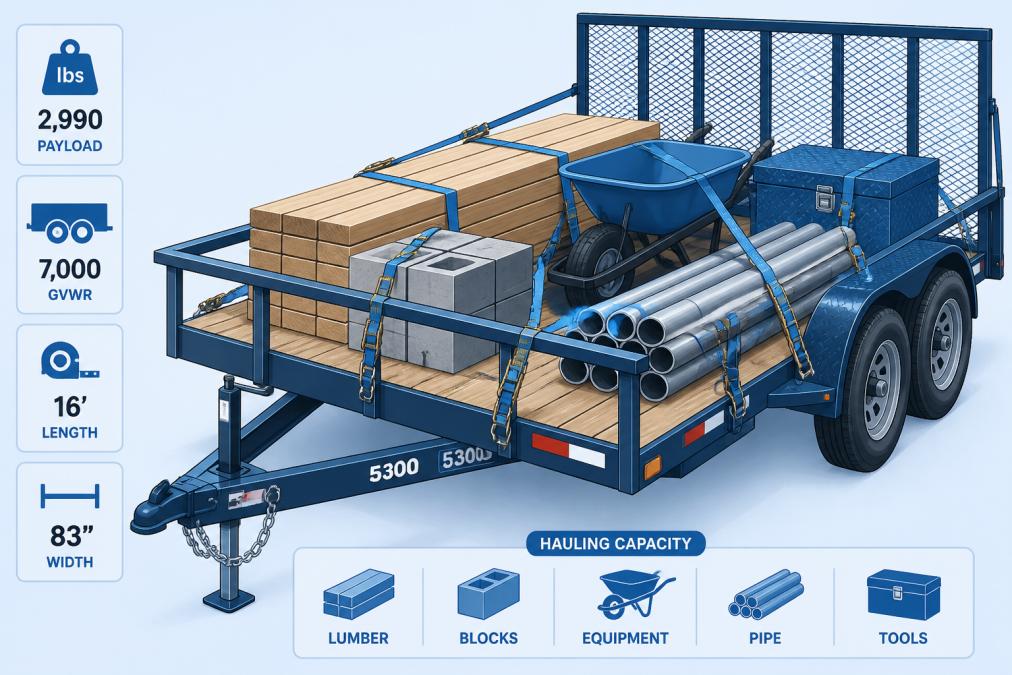
LP3 Rentals maintains a diverse fleet including utility trailers for standard loads, enclosed cargo trailers for weather protection, dump trailers for bulk materials, and car haulers for vehicle transport. Utility trailers typically handle 1,500 to 3,500 pounds. Enclosed cargo trailers protect sensitive materials from weather and theft. Dump trailers feature hydraulic beds for gravel, soil, and debris. Car haulers accommodate standard vehicles with secure tie-down points.
HB Trailer Rental specializes exclusively in car haulers built for specialty vehicles. Their trailers feature low loading angles that protect low-profile vehicles from scraping, ample deck clearance, and engineered tie-down points specifically designed for classic cars, hot rods, and motorcycles. If you need one specific trailer type repeatedly, HB’s specialization pays dividends. If you need flexibility across multiple project types, LP3 Rentals eliminates the need to call different companies.
How to Choose the Right Trailer Size for Your Project
Choosing the wrong trailer size wastes money, creates safety hazards, or leaves you stranded with equipment that won’t fit your load. A methodical approach prevents this.
Step 1: Calculate Your Actual Load Weight
Don’t guess. Weigh items individually if possible. Many hardware stores and recycling centers have scales. Common loads include: a pickup truck bed of gravel (1,500-2,000 lbs), a cubic yard of soil (1,200-1,500 lbs), a bedroom set (800-1,200 lbs), a full kitchen’s worth of boxes and appliances (2,000-3,500 lbs), a motorcycle (300-600 lbs), and a standard car (3,000-4,000 lbs). Add 20 percent to your calculated total as a safety buffer.
Step 2: Verify Your Towing Vehicle’s Capacity
Find your vehicle’s towing capacity in the owner’s manual or on the manufacturer’s website. A 2023 Honda CR-V has a towing capacity of 1,500 pounds. A 2023 Ford F-150 can tow 5,000 to 14,000 pounds depending on configuration. Understand the difference between towing capacity (maximum weight the trailer can weigh when fully loaded) and payload capacity (how much weight you can add to your vehicle).
Step 3: Account for Tongue Weight
Tongue weight, the downward force the trailer’s hitch applies to your vehicle, typically equals 10 to 15 percent of the trailer’s total loaded weight. A 3,000-pound loaded trailer exerts 300 to 450 pounds of tongue weight. Your vehicle’s payload capacity must accommodate this tongue weight.
Step 4: Match Trailer Size to Load Dimensions
Weight is only half the equation. Your cargo must physically fit inside or on the trailer. Common dimensions include: 5×8 utility trailer (bedroom set, yard waste, small equipment), 6×12 utility trailer (furniture from a small house, multiple pallets), 7×16 enclosed cargo trailer (one-bedroom apartment contents), 8×20 enclosed cargo trailer (two-bedroom house contents), and car hauler 16-20 feet (vehicles, with length accommodating wheelbase plus 2 feet clearance at each end). Measure your largest item and confirm it fits within the trailer’s interior dimensions.
Step 5: Understand Hitch Class and Coupler Size
Trailers connect via a hitch receiver rated by towing capacity. Class I handles up to 2,000 pounds (sedans and small SUVs). Class II handles up to 3,500 pounds (midsize SUVs and trucks). Class III handles up to 8,000 pounds (full-size trucks). Class IV handles up to 14,000 pounds (heavy-duty trucks). The coupler size (1⅞-inch, 2-inch, or 2⅝-inch) must match the hitch ball size. When you rent a trailer, confirm the hitch class and coupler size match your vehicle.
Step 6: Consider Maneuverability and Fuel Cost
A larger trailer increases fuel consumption and makes parking, backing up, and navigating tight spaces more difficult. Calculate whether a smaller trailer with multiple trips is more practical than a single trip with a larger trailer.
Common Sizing Mistakes to Avoid
- Underestimating weight: Most renters book a trailer one size too small. If you’re unsure, go up one size.
- Ignoring tongue weight: A 3,500-pound trailer with 400 pounds of tongue weight requires a vehicle with at least 400 pounds of available payload capacity.
- Forgetting about the hitch ball: If your vehicle doesn’t have a hitch receiver, you’ll need to install one before renting ($200-$500).
- Overloading: Loading a trailer beyond its rated capacity is dangerous and voids the rental company’s damage waiver.
- Not accounting for future items: Build in 20 to 30 percent extra capacity.
| Trailer Type | Typical Payload | Best For | Common Dimensions | Hitch Class |
|---|---|---|---|---|
| Utility (open) | 1,500-3,500 lbs | Yard waste, furniture, equipment | 5×8 to 7×16 ft | I-II |
| Enclosed cargo | 2,000-3,500 lbs | Weather-sensitive items, valuables | 5×8 to 8×20 ft | II-III |
| Dump | 3,000-5,000 lbs | Bulk materials, debris, gravel | 6×10 to 8×14 ft | II-III |
| Car hauler | 3,500-5,000 lbs | Vehicles, motorcycles, specialty transport | 16-20 ft bed | III-IV |
When to Ask for Help
If you’re unsure about any of these steps, call the rental company before booking. A good rental agent will ask about your load, your vehicle, and your experience level, then recommend the right trailer. HB Trailer Rental’s emphasis on direct contact is valuable because their specialists can confirm your vehicle is compatible with their car haulers before you arrive. LP3 Rentals’ online booking is convenient, but a quick phone call to confirm your choices is worth the time.
Rental Rates and Pricing Structure
LP3 Rentals typically offers tiered pricing: daily rates for short-term needs, weekly discounts that reduce your per-day cost, and monthly rates for extended projects. HB Trailer Rental prices their car haulers based on rental duration and current availability. Since they specialize in a single product category, their pricing reflects the expertise and specialized equipment involved in vehicle transport. Peak seasons (summer, holidays) typically command higher rates than off-season periods.
For current pricing, contact them directly or visit their websites. What matters more than the headline rate is understanding what’s included: Does the rental include securement equipment, insurance coverage, or delivery? Are there mileage limits? What are the damage policies?
Trailer Rental Insurance Requirements and Coverage
Most personal auto insurance policies extend liability coverage to trailers you tow for personal, non-commercial purposes. However, the liability limit, often $25,000 to $50,000 per occurrence, may be insufficient if the accident is serious. Your collision and comprehensive coverage typically does not cover damage to the rental trailer itself. You are personally liable for those repair costs.
The Damage Waiver: What It Actually Covers
Both LP3 Rentals and HB Trailer Rental offer optional damage waiver coverage, sometimes called loss damage waiver (LDW) or collision damage waiver (CDW). This coverage protects you against liability for damage to the rental trailer itself. A typical damage waiver costs 10 to 15 percent of the daily rental rate and usually includes a deductible of $500 to $1,000.
Critical exclusions apply. Most damage waivers explicitly exclude damage from improper loading or overloading, towing with an inadequate vehicle, negligent operation, commercial use if you rented for personal use, and mechanical failure or normal wear. Read the waiver terms before signing.
Commercial Use and Liability Insurance
If you’re renting the trailer for commercial purposes, construction work, moving company operations, or dealership vehicle transport, your personal auto insurance almost certainly excludes coverage. Commercial general liability insurance typically covers bodily injury and property damage liability up to $1 million or more. Rental companies will ask to see your certificate of insurance before handing over the keys.
Practical Steps Before Renting
- Call your auto insurance agent and ask: "Does my policy cover rented trailers? What is my liability limit? Does collision coverage apply to rental equipment?"
- Determine whether the rental company’s damage waiver is worth the cost.
- For commercial rentals, confirm you have commercial liability insurance and bring proof to the rental location.
- Before leaving the rental lot, inspect the trailer thoroughly. Take photos of any existing damage and request that the rental agent document pre-existing damage in writing on your rental agreement.
- Load the trailer within its rated capacity. Overloading is the most common reason damage waivers deny claims.
Damage waivers are optional, but the financial risk of declining coverage is substantial. A single accident or loading mistake can result in a $2,000 to $5,000 repair bill. For most renters, the $5 to $10 daily cost of waiver coverage is worth the protection.
Booking Process and Service Availability
LP3 Rentals likely offers online booking through their website, allowing you to select trailer type, rental dates, and pickup/delivery options without speaking to anyone. This convenience works well for straightforward rentals when you know exactly what you need.
HB Trailer Rental emphasizes same-day booking availability for their specialty car haulers. They likely require direct contact to confirm availability and discuss your specific vehicle’s requirements. This personal touch ensures the right trailer shows up for your load.
Consider your booking timeline. If you plan projects weeks in advance, online booking with LP3 Rentals offers speed and convenience. If you need equipment on short notice or have unusual requirements, HB Trailer Rental’s direct availability model may serve you better. Service area matters too, check whether each company can deliver to your job site.
Which Rental Service Fits Your Needs
Choose LP3 Rentals if you need flexibility across multiple project types. You’re moving furniture one week, hauling yard debris the next, and transporting equipment for a contractor job the week after. Their diverse fleet eliminates the need to call multiple companies.
Choose HB Trailer Rental if you’re exclusively transporting vehicles, classic cars, motorcycles, hot rods, or specialty vehicles. Their equipment is engineered specifically for this task with gentle loading angles, secure tie-down engineering, and experienced operators who understand protecting valuable vehicles.
Consider your location, timeline, and equipment comfort level. For most general hauling needs, moving, yard work, construction materials, LP3 Rentals delivers straightforward, flexible solutions. For specialty vehicle transport, HB Trailer Rental’s focused expertise is worth the call.
Choosing the right trailer rental partner depends on matching your specific project needs with the company’s strengths. At Urgency Trailer Rentals, we understand that every hauling project is different. Whether you need a utility trailer for yard waste, an enclosed cargo trailer for weather protection, or a car hauler for vehicle transport, our personalized recommendations ensure you get the right equipment without overpaying for capacity you don’t need. Our family-owned service includes free local delivery, unlimited mileage, and securement items at no extra cost. Book your trailer with Urgency Trailer Rentals and get the flexibility and reliability that makes your project run smoothly.
Frequently Asked Questions
What factors should I consider when choosing between local trailer rental companies?
Evaluate trailer types available for your specific project, gross vehicle weight rating and payload capacity to match your load, rental pricing for daily, weekly, or monthly periods, whether free local delivery is included, equipment condition and maintenance standards, booking flexibility and same-day availability, and insurance or damage coverage policies. Compare services based on your actual hauling needs rather than price alone.
How do I know which trailer size I actually need for my project?
Determine your total load weight first, then check the trailer's gross vehicle weight rating and payload capacity to ensure it can handle your cargo. Measure your materials' dimensions and compare them to trailer bed length and width. For utility trailers, calculate cubic footage needed for bulky items like furniture or yard waste. For specialty items like vehicles, verify the trailer has appropriate tie-down points and clearance. When in doubt, consult with the rental company about your specific project details for a personalized recommendation.
Do LP3 Rentals and HB Trailer Rental offer insurance coverage for rentals?
Insurance coverage varies between rental companies. Some offer optional damage waiver or protection plans, while others require you to provide your own coverage through personal auto insurance or a separate policy. HB Trailer Rental specializes in car haulers and may have specific coverage options for specialty vehicles. Contact each company directly about their current insurance requirements and available protection plans, as policies change and vary by rental duration.
What's included with trailer rental, and what costs extra?
Most trailer rentals include the trailer itself and basic safety equipment like chains or straps. Some companies, like Urgency Trailer, include securement items at no extra cost. Delivery fees, damage waivers, insurance coverage, and specialized equipment like winches or brake controllers may carry additional charges. Always ask about what's included in the quoted price before booking to avoid surprise fees at pickup or return.
This article was written using GrandRanker